
A Resonator Guitars Special
Rebirth of a 10th years old record + an article I wrote on resonators

Hello & welcome to the first newsletter of 2026!
Since we’re all are in a fractured attention, smothered by too much of everything, instead of wishing you “the best” or to get everything you want for this new year, I wish you to find more resonance in your life, relationships and whatever you chose to pursue.
Today will be all about resonator guitars but before we dive into the bulk of this post…
I have a couple of short news to share.
The interview I did with the french podcast Ambient Memory is now available in the archive (with lots of others btw). For almost 2 hours, we talked about my different projects and their evolution, my approach, live-looping, modular synths, online communities, etc... all interspersed with musical excerpts.
If you understand french, please go have a listen here: https://ambientmemory.lepodcast.fr/ambient-memory-l-interview-avec-kolyder
Even more people helped spread the word about Kolyder’s latest record:
DJ SpaceTerrapin included one of the track in his “It came from enclosure three” ongoing series.
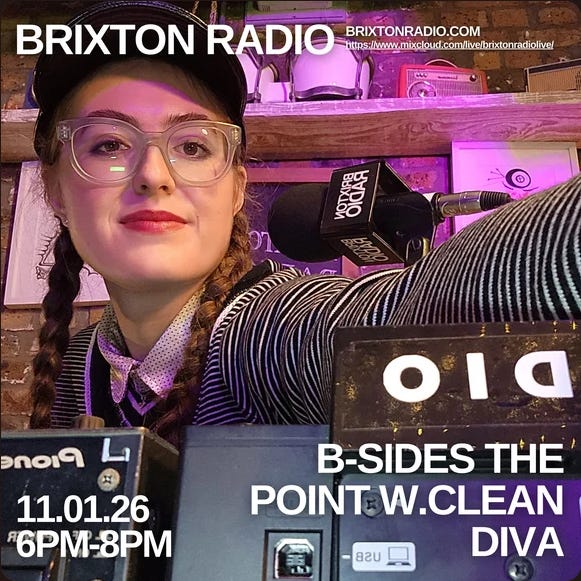
Another was played B-SIDES THE POINT a show putting the spotlight on less-known ambient producers broadcasted on BRIXTON Radio, a very cool community radio based in London.
Clean Diva played a very cool selection of tracks and read the stories around those tracks or projects that were sent to her by the artists. It was very fun watching the live stream & interacting with everyone in the chat!
The replay is available here as audio.
I wrote a (long) article about resonator guitars:
It’s something that got me quite busy those past months and it’s finally out: A guide to resonator guitars I wrote for “All Things Chris Whitley”, an online publication/community about the music & life of Chris Whitley, who I consider one of my favorite musician and songwriter.

Chris mostly played resonator guitars, an instrument that is still very much shrouded in mystery.
My goal writing this was to help anyone understand what resonator guitars really are and how to tell the different types apart, in the hope it would give a deeper appreciation of the music made with them.
I did my best to explain a rather specialized instrument in a “non-specialized” way, and illustrate my words with lots of pictures, videos and audio examples. If you are familiar with these guitars, bear in mind that I had to simplify some notions so it’s understandable & digestible by everyone, including non-guitar players.
It’s a long one, but once you’re done reading this, you will know most of what you need to know about the different types, their respective sounds and will have resources to dive deeper!
Celebrating the 10th anniversary of a record I made with a resonator guitar
Speaking of resonators, this months marks the 10th anniversary of “Modular Glitchtar Soundscapes Vol.1”, an album of live-looping improvisations I recorded almost exclusively with a Resonator Guitar played lap-style.
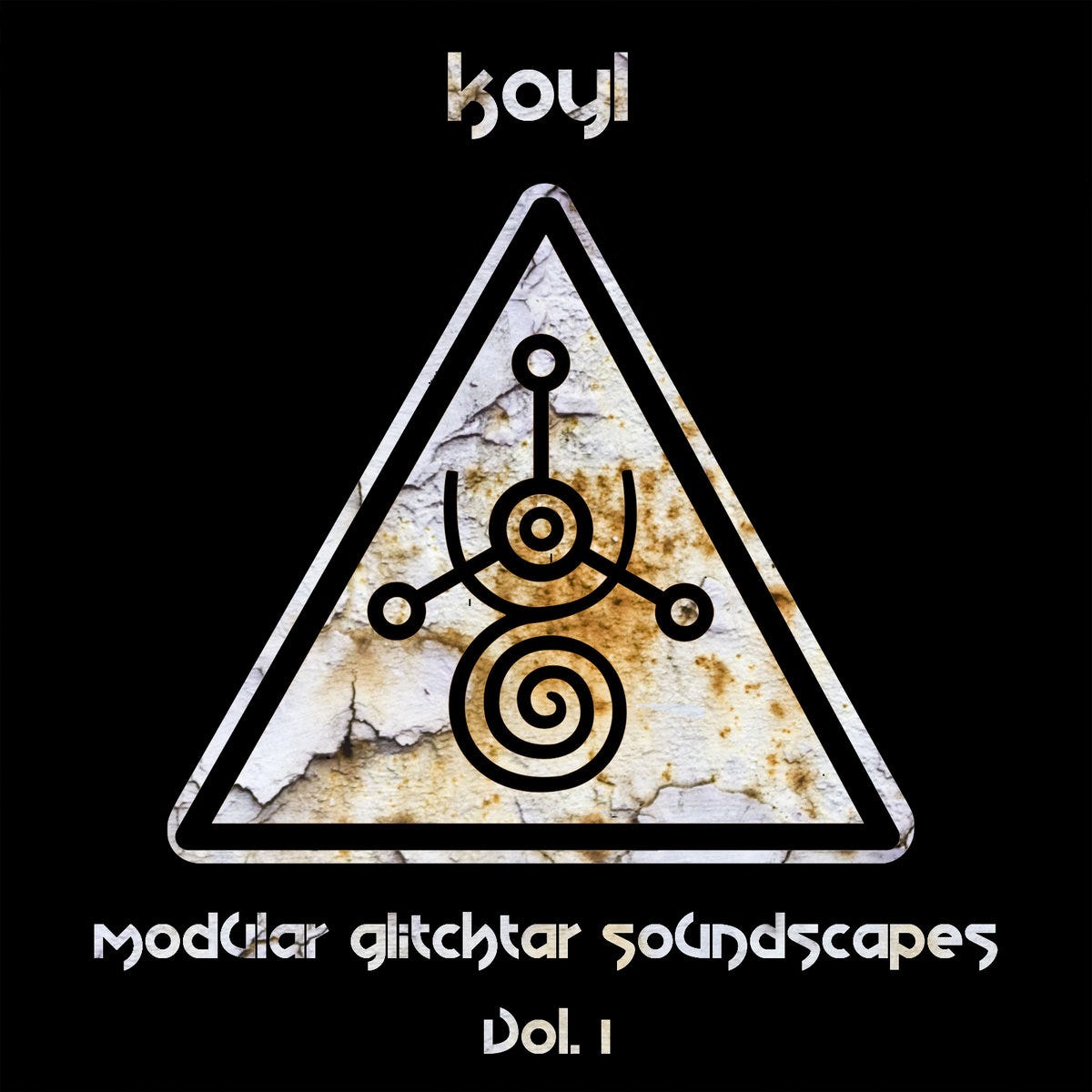
I consider this record to be my first “real” record, one with an original proposition (a traditional instrument colliding with modern technology). It has an interesting origin story and its impact rippled way beyond expected, on top of laying the foundations of a way of making music that I’m still exploring now.
I’m still proud of the record but there are 2 things I regret about it:
The tittle & artwork hardly reflect what’s inside. The name came from realizing the instrument I played doing these improvisations was the whole ensemble of guitar + pedals + loopers rather than just the guitar. It led to use the term “modular, as in “modular synths”, only it produced rather glitchy guitar sounds, hence the term “glichtar”. Also those tracks are quite structured, melodic & they tend to take the listener on a journey… The word “soundscapes” is not a very good way to describe them.
I don’t really like the name of one of the track: “Toaster spice bread & peanut butter”.. I most probably lack inspiration for this one at the time… or maybe I thought it was a good idea ?
One of the perk of being independent is I’m the master of my own domain and I can do whatever I want with my releases even if it goes against the usual practices of the music industry…

So I hereby declare this record re-birthed, re-baptized & augmented!
It’s now called “Quantum Slide Resonator Travels” and it’s already available on Bandcamp: it has been remastered and comes with a new artwork, a new track listing & a bonus track!
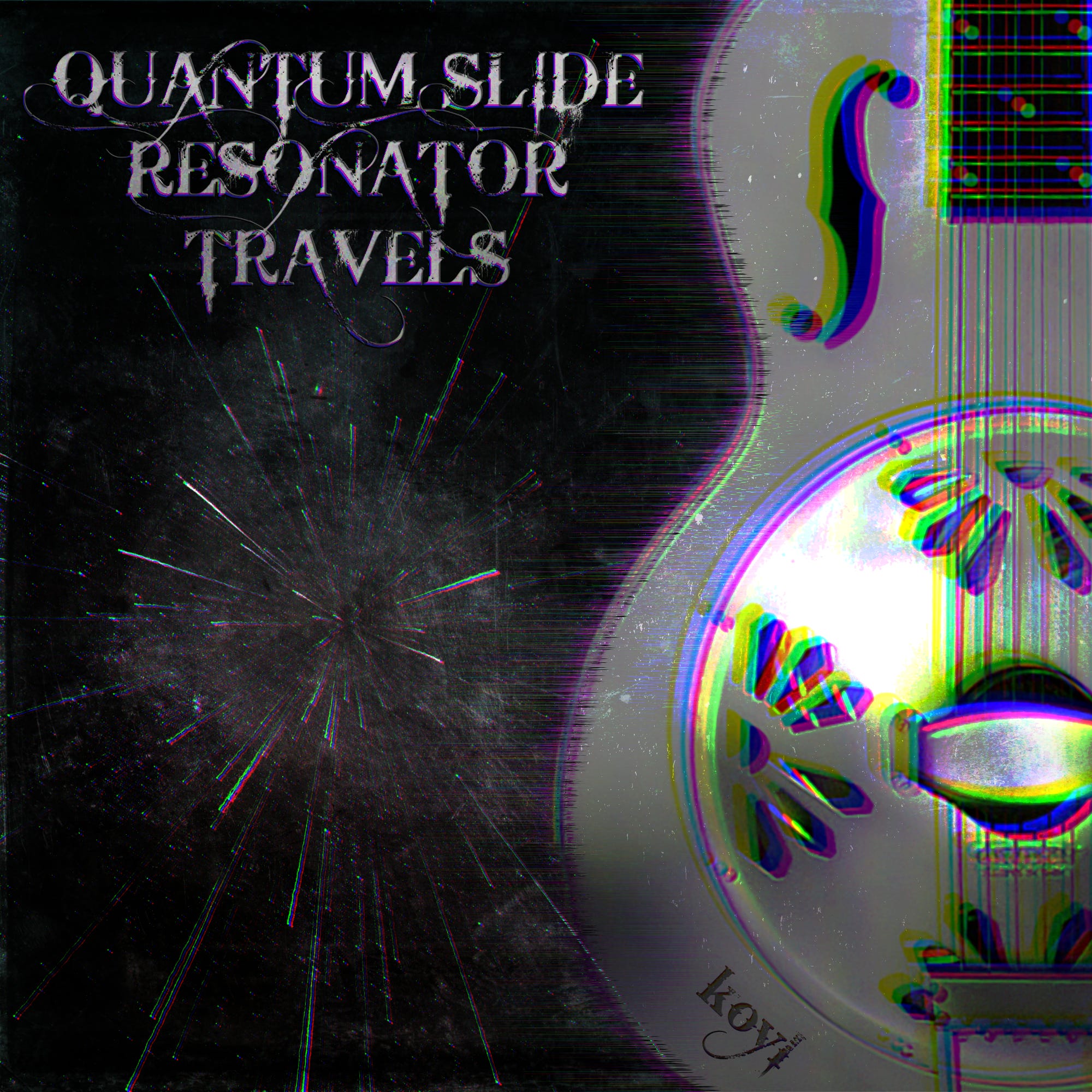
To celebrate this 10th years anniversary and rebirth, I thought it would be nice to share the stories around the original album and give details about its making ...
It will be a long text, for a long album, so grab your favorite beverage, press play on the Bandcamp player below and read on!
What sparked the making of this album:
As I said in the article shared above, I’ve always had a thing for resonator guitars: I’ve always wanted to try one but they seemed hard to come by and I wasn’t sure I’d be able to play them and be good enough to make actual music... They also stylistically didn’t really fit the music I was making.
Two years before the release of the record, I had just terminated my 1st live-looping guitar improv project Le Principe d’Inconstance, just before moving, in the middle of winter, to a new place whose isolation wasn’t fully done. It led to me getting ill and I ended up with having my ear canal blocked, not on the outside (ie: of the eardrum) but on the inside (behind the eardrum). I went partially & momentarily deaf from it. The underwater sensation and my disturbed sense of balance, plus the extra efforts needed to just listen to someone (especially in a noisy environment), were all very tiring.
It took 6 months to start to hear some progress & more than a year to get rid of it completely, and to fully recover my hearing. During this time, I kept social interactions to a minimum & wasn’t able to go back to making the layered kind of music I made before. But I still needed to make music, so, inspired by Pan Sonic, Orphx, Lakker and the Stroboscopic Artefacts label, I turned to Techno. The minimalism, hard hitting sound of the genre was something I could work with.
I learned a lot making Techno but it wasn’t fully “me”, and as soon as my health got better, I felt the need to do something that hits closer to home. Despite my doubts, I started to seriously consider doing something with a resonator.
I spent my summer doing my research and it turned out the quality of resonators built in Eastern countries had greatly improved and that you could easily find some of good quality, at reasonable prices.
I also discovered lap style: a type of playing I had never tried that consists of playing the guitar on your lap using a slide bar, ala Ben Harper. The idea of purchasing a resonator guitar to make live-looping improvisations, as I did with my previous project Le Principe d’Inconstance, started to grow.
Overcoming some technical challenges:
There was one big issue with this plan though: Resonators are rather tricky to record. The only way to get an accurate & good sound is to use several actual microphones pointed at the guitar from different angles & at different distances. This rather complicated setup becomes impossible to manage in a live-looping & improvisational context. Live-looping consists of recording several layers of the instrument which require a very clean signal. Any noises or extra-sounds would be added on each layers, turning the result into a mess rather quickly. Plus the tracks would be performed & recorded live so there’s no way to try cleaning them up.
Sure there were more practical, and cleaner, way to record a resonator: You could use a piezo transducer (a pickup that translate the vibrations directly from the strings) but the tone you get from these is, at best, close to an acoustic guitar. Another popular way is to add an electric guitar pickup to the guitar, which gives you a tone very close to… an electric guitar. Both ways are acceptable when playing live but if I were going to get a resonator, I’d want to be able to get the actual sound of a resonator... I was stuck!
That’s until I found about this new pedal, especially made to be used with a piezo-equiped resonator. This pedal added the tonal characteristics of a resonator to the raw, acoustic guitar-like tone you get with the piezo alone. It was done by recording Dobro-legend Jerry Douglas’ best guitars with high-quality microphones so Jerry could get the actual tone of his guitars when playing live. If it’s good enough for Jerry, it’s certainly would be good enough for me!
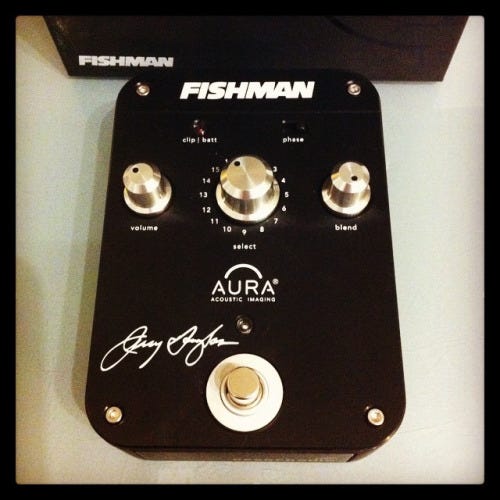
Another nice surprise was when I found out Gretsch (a guitar brand not particularly known to make resonators in the past) created a line of well-made guitars at modest prices, some of them already equipped with the very piezo model supposed to be used with the pedal. I also happened to find a B-stock of one sold on eBay by a US store... so I took the jump!


Building the rig:
Then I wanted to also get an electric sound out of that guitar and be able to play with both the natural reso sound and the electric tone. So I added a magnetic pickup myself and made the wiring so each type of pickup would come out separately using a stereo cable.


I then built a pedal that allows me to chose to keep both signals separated (and go through different effects lines) or have them go through the same cable.
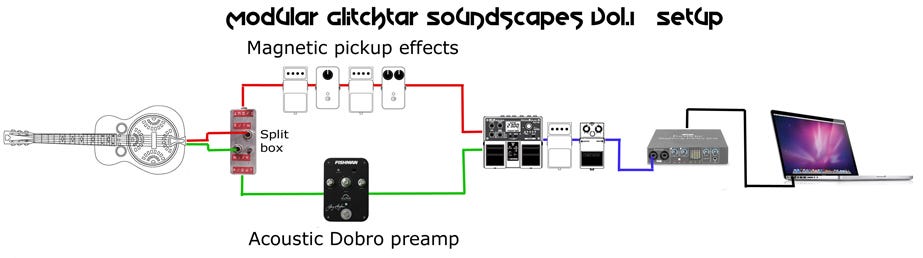
This is why, on this record, you can get the impression that there are two guitars playing at the same time, and maybe that those tracks were not 100% recorded live... They were! You’re just hearing the electric output going through some effects & the natural tone output kept dry or processed by much more minimal effects. Sometimes I would also play with both sounds at the same time but only loop one of them, which can provoke some more psycho-acoustic effects to the listener’s brain!
The live-looping setup consisted of 3 loopers hosted in a laptop & 2 MIDI controllers… very simple compared to what I’m using these days!


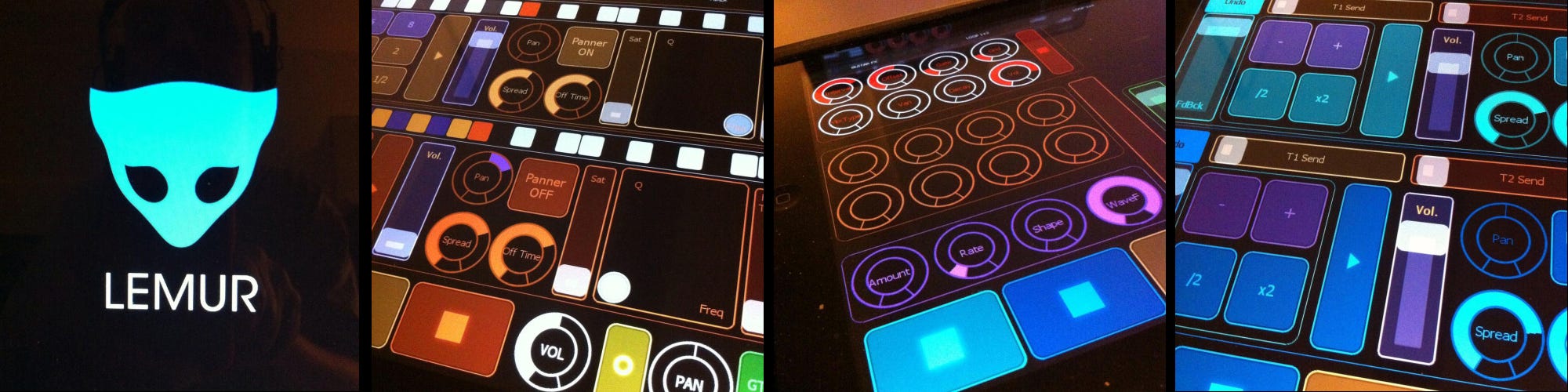
Later on, I created a control surface for the loopers with the Lemur app on an iPad.
The recording process:
I set a goal for myself to record & release one improvisation each month. I had only 3 months of lapstyle playing when I started but I quickly made significant progress doing this.
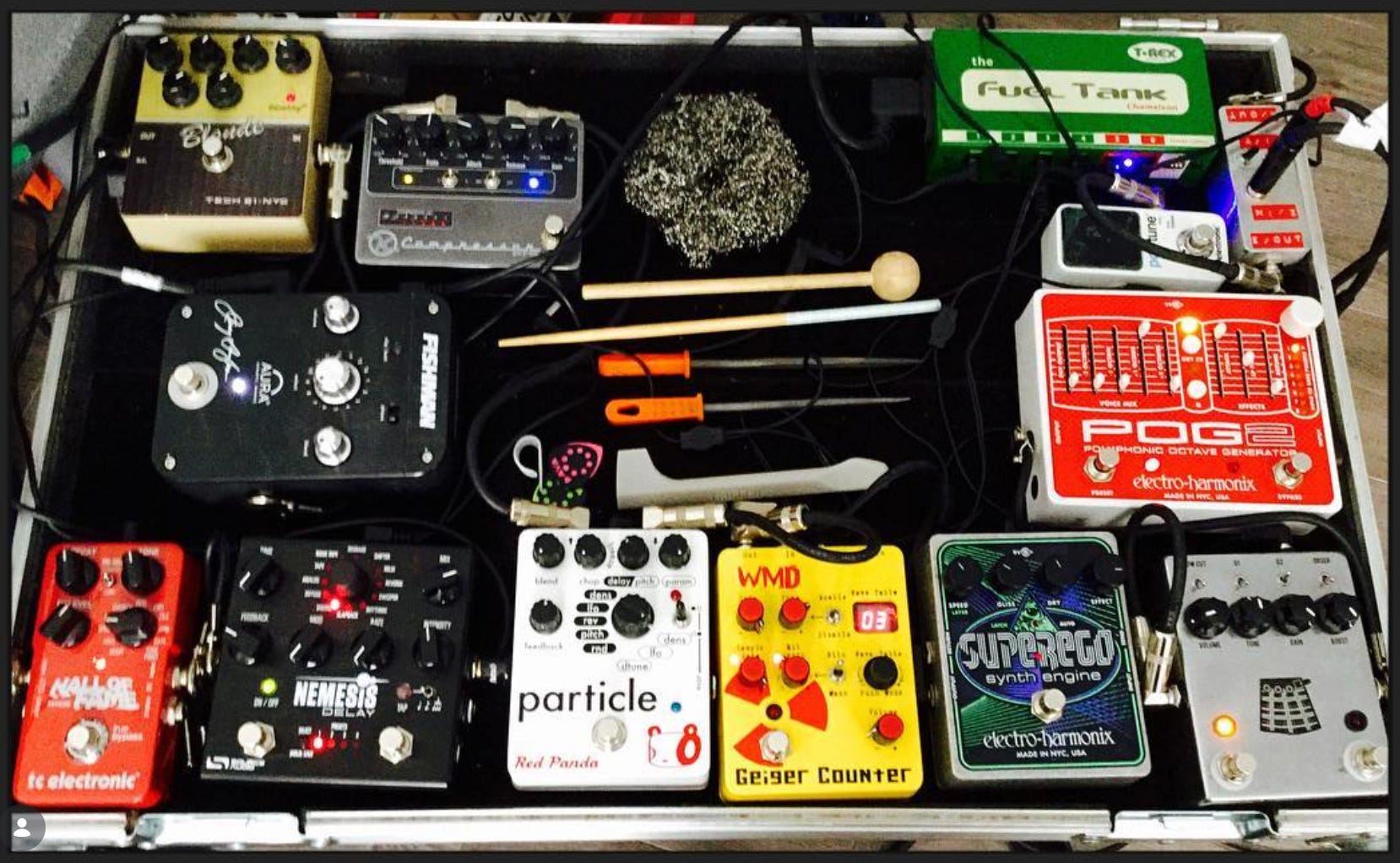
I had sold most of my guitar gear at this point so I pretty much had to start back to zero when it came to effect pedals. In the final album, I kept the track in the same order they were made & released, and you definitely can hear my skills getting better and the sounds getting more full fledged as the album progresses.
So I did this, for a year and ended-up releasing 12 tracks: 9 improvised tracks using the Gretsch resonator, 1 improvised track using a Fouke aluminum lapsteel I acquired during that year (”and the moon turned red”), 1 track made with a barely usable electric guitar that I modified for lapstyle playing (”Hors du bleu” & one studio-made track using another resonator I got later & electronic instruments (“Lullaby”).


A year later, I was quite happy with how this whole journey turned out. It has been a work of patience & dedication to navigate the ups & down of a long term project, but I managed to push though self-doubts and reached the finish line. I put them all in one album and did some homemade CD-R limited edition of it.
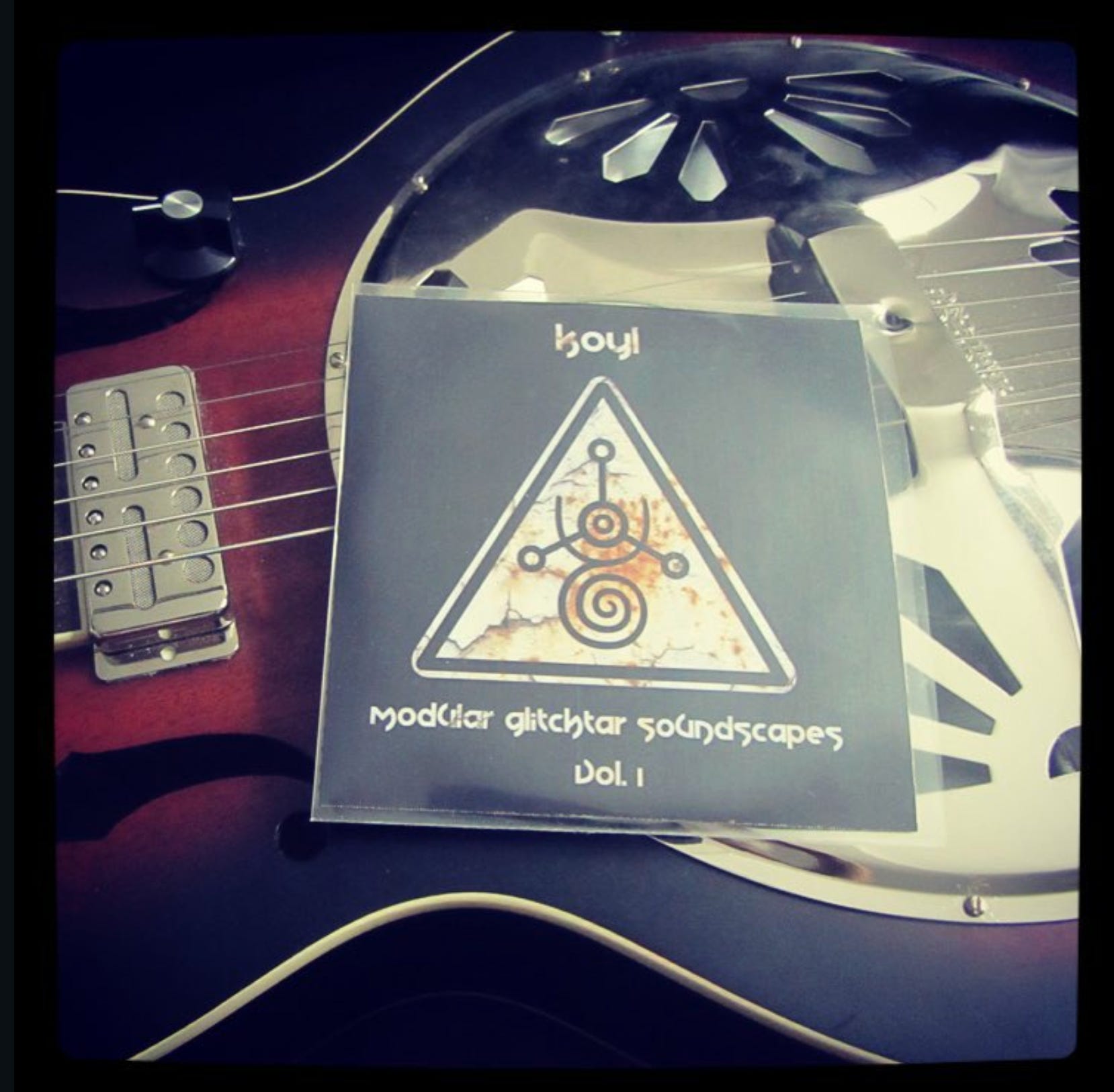
Now that I had a proper record, with an original concept: why stop there ?
Promoting the album:
So I decided I’d send it to some website & blogs and see if they wanted to review it. I also sent it to some of the effect brands I used for the recordings.
It was my first time doing this.
I’d say I received answers to half of my messages: some to tell me the music didn’t match their editorial lines (which was very nice of them & not that common) and some were actual small reviews. I also heard back from some brands: Electro-Harmonix shared some of my posts on Instagram & I got a very nice message from Red Panda Lab, followed by a post on IG as well.
One morning, several weeks after I sent my emails, I found a message in my inbox from Echoes & Dust. There were a rather new publication at this point if I remember well, but already well-respected. I wasn’t expecting to still get answers at this point, let alone from them... The message just said: “Hello, I think he liked it” with a link.... a link to this: Review on Echoes & Dust
To this day, I can’t really believe this record got such a review as a result of trying some crazy because I thought they were out of my league!
It’s a lesson I guess we all have to be reminded (because it’s easy to give in to the crickets we often left hanging with when sending our work out):
Just try things: As long as it’s sincere & it makes sense for you, just dare to show your work, you never who might hear it and what might happen as a result.
Overall, I had achieved my goal of recording something I’d be proud of and excited about, something that would pull me out of the weeds I was stuck in. I opened a whole new area of music making (playing lapsteel), I even got some recognition from the press and my peers.
But the story of this record doesn’t end here... In the following years, I ended up giving a physical copy of it to some artists who influenced my music or this very record!
“Never meet your idols” they say…
When LOW came playing in my city for their “Ones & Sixes” tour, I was able to meet & have a talk with Alan Sparhawk. He had released his solo album on Silber Media, the label that released my “Fingerprints” EP, and we both new Ben Hinz (aka “Your old pal AEN) from Dwarfcraft Devices, an guitar effect maker whose 1st pedal was called like one of the best-known LOW record “The Great Destroyer”. Ben even used a recording I did with his pedal as a 1st “demo” for it (it was mainly noise!), and I ended up providing the music for his first movie.
So connecting with Alan was fast and we ended up talking about music & pedals for a little while. It was a great moment.
Next was Josef Van Wissem, the baroque lute player who composed the music for Jim Jarmush’s Only Lovers Left Alive, a movie and OST that greatly influenced my playing and improvisations on this record. “Tanger In Dreams” is a direct homage. Josef was very welcoming and very nice.
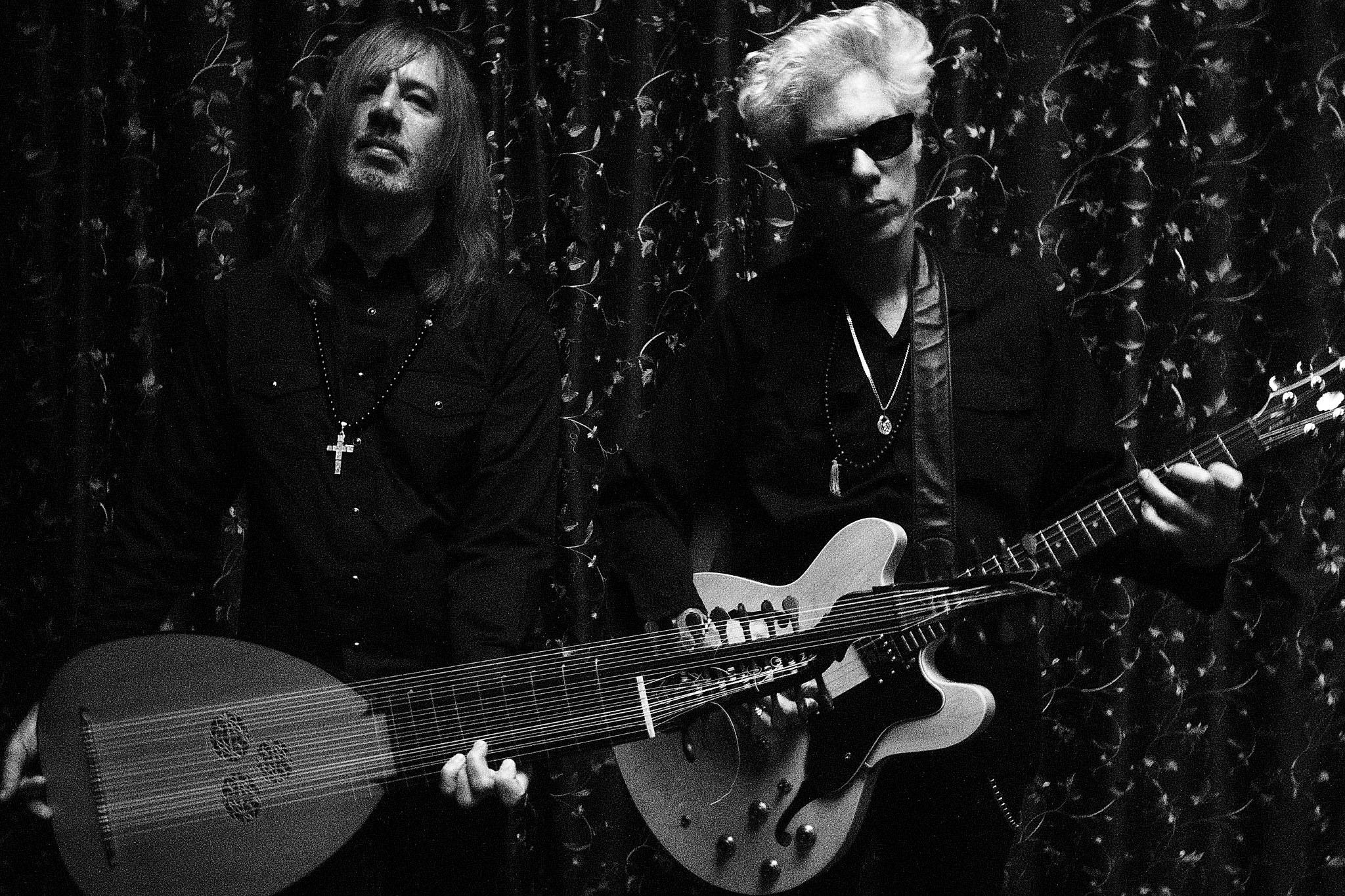
Last one was Emma Ruth Rundle, who was opening for Wovenhands when they play in my city.

In this venue, artists were not usually accessible but I took a CD because “you never know”. I got very lucky coming at the merch table at the right time: Wovenhands had just started to play and Emma was there alone. The music was loud but I managed to shout in her ear what it was all about. She very gracefully accepted the CD and asked “Do you have a (vinyl) record player ?”. I didn’t readily understood where she was going with this question but answered “no”. That’s when she ask what T-shirt size I was wearing that I started to get it… So I told her that she didn’t have to, etc… but she insisted in a way that’s hard to put it words. But let’s say that I understood that Art was something very valuable & precious for her, and if I gave her my Art, she had to give something back (ideally her Art). It was a short but heartwarming meeting with one of the nicest person I’ve ever met.
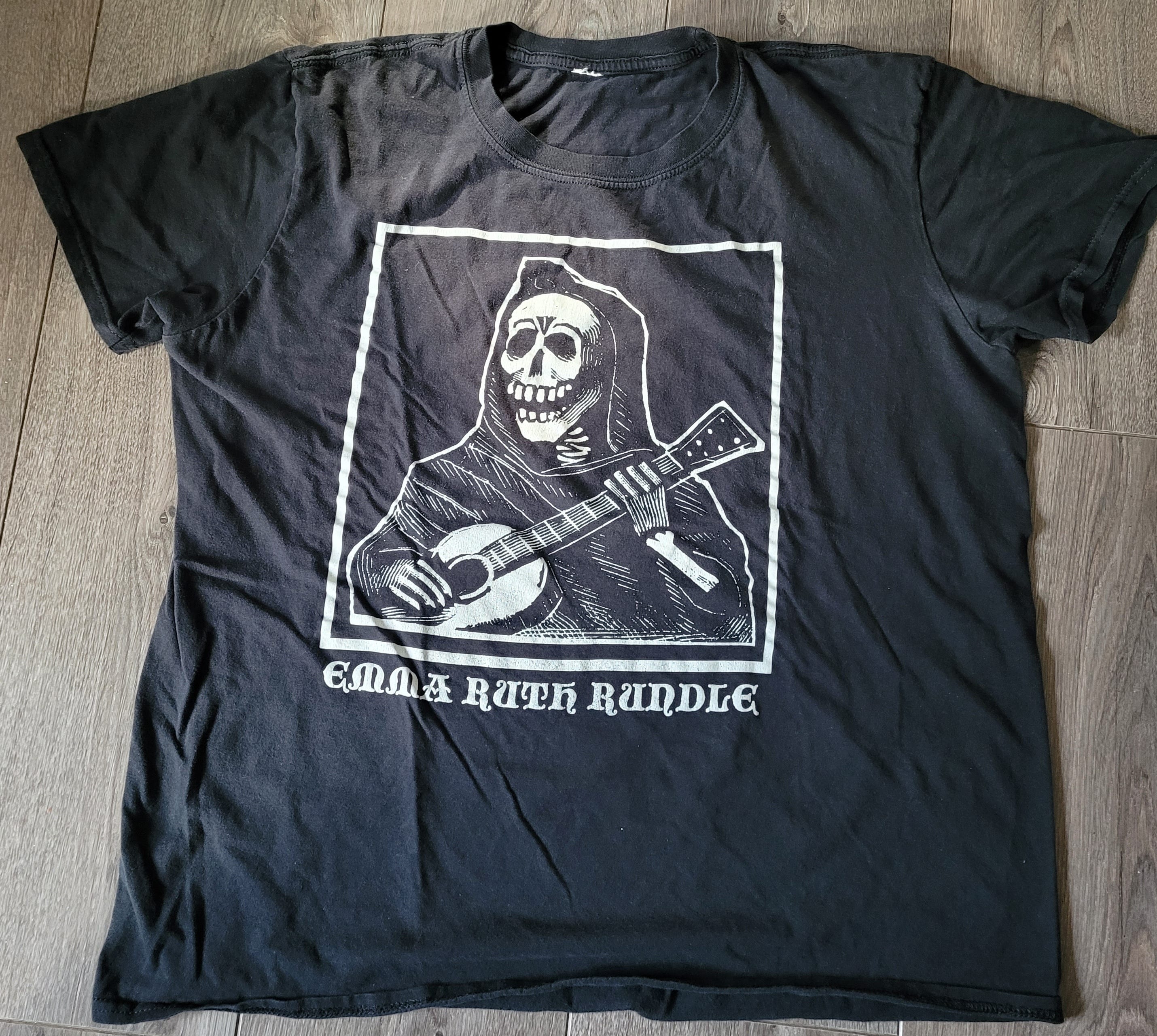
That’s it for today. Next time I’ll start to unveil what will be going on for the year to come…
Take care, give a fuck… and try crazy things! You never know…. ;)
koyl
Now I understand why your ATCW group handle was koylengineering! You're very enterprising, both in creating your own sound splitter thingie (yes, that's the extent of my understanding), planning a web of effects pedals, and gaining attention for your work. Many of us lack the confidence to put our work out there; that's clearly not an issue for you. Great review at echoes and dust! Wishing you continued artistic adventures and success in promoting your art ....